Thursday, July 3, 2014

The Pony's Trail - with ee cummings quote

Special Poster offer!
The Pony's Trail - with ee cummings quote


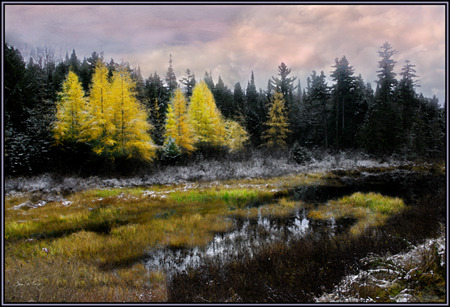
This poster is created from one of my favorite images and includes a quote from ee cummings: "To be nobody but yourself in a world which is doing its best, night and day, to make you everybody else means to fight the hardest battle which any human being can fight; and never stop fighting." ~ e.e. cummings

Available in two different sizes and signed limited edition or open edition. Choose below.

Choose Size


Friday, June 6, 2014

Phoenix Project Aims at Cleanup and Job Creation in Niger Delta


Phoenix Project Aims at Cleanup and Job Creation in Niger Delta
Creating Multiple Positive Outcomes from Spill Cleanup

Brief:
The Phoenix Project proposes to create a pilot "Enterprise Recovery and Empowerment Zone" in the Niger Delta of Nigeria to test an innovative approach to oil spill cleanup that includes creation of an enterprise community generating electricity, jobs and research opportunities for the people of the region.


You’ve probably seen the photos of the devastation in the Niger Delta. They were likely a sidebar story to coverage of the Gulf Oil Spill. As cleanup commenced here in the US within days of the accident, an equal amount of oil was being spilled in West Africa’s most fertile valley and richest fisheries and little was being done by anyone. Further, on an annual basis the Delta has experienced spills equivalent to two Gulf spills every single year.

Oil Companies find the inconspicuous nature of drilling and harvesting oil in Africa an attractive alternative to doing so in the West where consumers are more organized and unforgiving. Many of the local Nigerian politicians find that oil money makes a very tempting and large target for illicit proclivities. Add to all this a spill cleanup funding mechanism that suffers from a complete lack of transparency, further tempting even aspiring “honest” politicians and distancing oil companies from the assumption of responsibility and you have a recipe for an amoeba-like environmental catastrophe - growing and spreading as it devastates the economic and social fabric of the region. 

Enter Project Phoenix, the conceptual brainchild of former NH Senator Wayne King of with the help of his Nigerian counterpart Osita Aniemeka. King began going to Nigeria in 1997, shortly after an unsuccessful run for Governor, Leading a team of social entrepreneurs on behalf of the Ford Foundation, King’s team, which included Santa Barbara-based Philip “Kip” Bates of the University of California, Santa Barbara who was the technology guru of the Team. Rounding out the team was the late Dr. Chidi Nwachukwu a native born Nigerian and US Citizen and CEO of Sameday Express and a unique startup called UConnet that was one of the nation’s very first companies to use the Internet for telephone services, now referred to as “Internet Telephony”. Since 1997 the team has continued to return to West Africa for Ford Foundation, USAID and the World Bank among others. Dr. Nwachukwu died from Leukemia in 2000, when the idea for doing something about oil spills in the Niger Delta was little more than a glimmer in the eyes of the trio, and the team has dedicated this pilot project in his honor.

The Phoenix Project officially has been in the works for more than four years when King got the idea that it might be possible to build an “Enterprise Community” around the oil spill cleanup process where the cleanup and associated funds - if they could be accessed - would drive the development of both cleanup jobs as well as jobs related to the bi-products of the cleanup, specifically electricity, biochar, and biofuels. The more the team began to explore and research the components they envisioned the mmore they came to realize that there may be a way to make the effort sustainable, replicable and taken as a whole - carbon-negative. The Kyoto accords, that took effect in 2005, also spurred the idea that there might also be an opportunity for Carbon Credit trading based on the Carbon-Negative

In most circumstances today the end results of an oil spill cleanup are hidden from the public, quite possibly because the companies want the problem and its accompanying bad publicity to simply go away. “This means” said King, “that the opportunities to generate revenues from the cleanup of the oil and the treatment of the oil contaminated absorbents - like booms - go unnoticed and and untapped. Our pilot project recovers and recycles as much of the oil as we can, using a patented cellulose absorbent from MOP Environmental Solutions for the cleanup on both land and water (MOPenvironmental.com) then using the remaining biomass (the cellulose after oil removal) to generate electricity with a small, mobile, pyrolysis power plant manufactured by EcoReps of Adelaide Australia (www.Ecoreps.com.au). In addition to the electricity, the plant will also produce biochar a highly acclaimed soil amendment that has properties that make it both a fertilizer, a water storage element and a carbon sink - capturing carbon dioxide from the atmosphere and sequestering it for decades and perhaps centuries, releasing it only when called on for plant growth.” 

In addition to the jobs and opportunities created by the obvious products and processes The Phoenix Project - Niger Delta expects to seek out additional research and entrepreneurial opportunities that coincide with, and take advantage of, synergies that arise within the process. For example, research on biochar is at its very early stages and the use of it for bioremediation of oil spills is postulated but not thoroughly researched. Osita Aniemeka, Director of Nigerian operations, believes that the emphasis on research is consistent with Nigeria’s new emphasis on its agricultural sector and provides opportunities for the Phoenix Project to create jobs and ventures that empower women and young people who are particularly vulnerable to the economic woes brought on by these devastating and continuing oil spills.

Depending upon their ability to access oil spill cleanup funds and the extent of those funds, the Phoenix Project team believes that they can generate sufficient revenues to allow them to fund all or part of the cost of designating and cleaning up the next zone.

“We see this pilot project as our opportunity to develop an Open Source solution to the challenge of oil spills. Once we have tested the various aspects of the Pilot we will make the model available broadly to others who are seeking a solution to oil spills that creates a “Phoenix Effect” within an area devastated by a spill.” said Aniemeka.

The Phoenix Project is seeding the project with a crowd funding campaign on Indiegogo to raise the funds needed to bring together the communities, the experts and officials from both the government and the oil industry in the Niger Delta. They will also be carefully choosing the first site taking into account the long term needs of the community after the Enterprise and Empowerment Zone is turned over to a local governing body. “With a little luck”, King says, “we can move on to the next zone with most of the funds needed for the next cleanup, leaving a 1 megawatt electricity plant in the control of a local governing body to continue to provide badly needed and reliable electricity to the businesses and homes of the community.”  

The total cost of the pilot will be in the range of 12 million dollars but the companies participating as partners in the venture have all agreed to discount their costs in order to create the model. The net cost is likely to be closer to 8 million dollars, most of that for the capital equipment like the mobile power plant. “Once we have the model down right,” King continued “the net cost of each succeeding Zone should be somewhere in the range of $2 million dollars per zone, before calculating in revenues from most of the bi-products. While only the real thing will allow us to be sure, we are confident that after Zone one the process should be self sustaining - as long as there are funds available for the cleanup.” and in the Nigerian environment . . . that seems to be the biggest question mark.  

To learn more about the Phoenix Project you can visit the Project Phoenix Blog at nigerdeltaphoenix.blogspot.com

The Crowd funding effort can be viewed at http://igg.me/at/PPND


Thursday, May 1, 2014

Our Existential Challenge

Our Existential Challenge

Though I consider myself first a citizen of the planet, I continue to believe that the precepts - first laid down by my own Haudenosaunee (Iroquois) ancestors and then adopted by the framers of the US Constitution - are the foundation of the last best hope for the planet. That is why I am a patriot.

Last night I listened to an interview with PJ O'Rourke on NH Public Radio who said that the baby boom generation had never faced the sort of challenges that previous generations had faced. It was - ironically - followed by a short piece related to climate change. I assert that the challenges of climate change are in fact the greatest existential challenge that we have ever faced; and, while the solution must be forged inter-generationally, the baby boom generation has the greatest obligation to act because we bear the greatest responsibility for the creation of the problem. Furthermore, halting the advance of climate change is hardest for us because we, naturally, have become more set in our ways. In short, we must lead the way and get out of the way at the same time . . .

Dusk Dims Not her Colors               Cards                Fine Art Prints

Saturday, April 12, 2014

Reviving the Mt Eustis Community Ski Area


The cost of a ski ticket has - lately especially - made the sport of skiing out of reach for most New Hampshire folks. In addition to this, most ski areas have dropped their special rates for local citizens and especially students - an act that they will regret as climate change makes it more and more challenging to draw skiers. That's what makes this effort to revive the Mount Eustis community ski area important.

New Hampshire was once dotted with these small community ski areas. After all, New Hampshire was the birthplace of skiing in the United States so it made sense that communities would make an effort to provide an opportunity for their citizens. But over the years, particularly when skiing was more affordable to the average citizen and ski areas had community discounts for locals, the number of these ski areas dwindled until there were almost none.

Expect to see more of these efforts to revive old ski hills. You can learn more about NH's "lost" ski hills here.

You can help with the effort in many ways. I've donate sales of a beautiful image "Tamarack Tempest" taken within a few miles of Mt. Eustis.


To purchase this image on cards, posters as open edition or limited edition fine art prints, click here.

Thursday, April 10, 2014

Preparing for Climate Change in New Hampshire and Militating the Damage

Preparing for Climate Change in New Hampshire and Militating the Damage

For those who missed it, Laura Knoy's edition of The Exchange today on NH Public Radio, featured a discussion about Climate change that was very interesting and disturbing. Two important points of the many made deserve our attention. The first is that, without naming the Northern Pass Project the two scientists stressed the need for decentralized renewable energy as the pathway to a healthier and safer energy future for New Hampshire. Centralized sources of power - like Northern Pass - are more likely to generate jobs elsewhere instead of here in NH and push NH in the direction of what they termed the "High Emissions Scenario" that will wreak economic and environmental havoc on NH. Centralized sources also make us much more vulnerable to acts of terrorism (my observation not part of the discussion). The second point is that what we can do as individuals matters a great deal. Every step we take to reduce our own personal dependence on carbon generating energy sources is a gift we give to the earth.

Knoy's guests, Cameron Wake from UNH's renowned Institute for Earth Oceans and Space, who co-authored UNH's Report on Climate Change in New Hampshire; and Michael Simpson, climate adaptation scientist and chair of the Environmental Studies Department at Antioch University New England, which just announced establishment of a new Climate Change Preparedness Center at Antioch.

The burial of the power lines of Northern Pass is often mentioned as the resolution of the problem but in truth burial of the power lines is a compromise that fails to tackle the most important policy questions with respect to New Hampshire's energy future. If we have to live with buried power lines, it will be a victory for our "view shed" but the fundamental flaws that should kill Northern Pass altogether will cast a pall on our future in many other ways.


Read: http://nhpr.org/post/adapting-climate-change-flood-insurance

Listen here

UNH Institute for the Study of Earth, Oceans, and Spacehttp://www.eos.unh.edu

UNH’s report on climate change in New Hampshire.

Environmental Studies department at Antioch University New England

Antioch Center to study climate change preparedness


Washday, Alton, NH                          Cards & Posters                             Fine Art Prints


Tuesday, April 8, 2014

Time to Move Beyond the Death Penalty in New Hampshire

Time to Move Beyond the Death Penalty in New Hampshire
Wayne D. King

Like a lot of citizens, I have been all over the board on the death penalty during my life. It not because I’m indecisive, it’s because like most of us, I found it hard to get beyond the Old Testament admonition of “an eye for an eye” when I was hurting or outraged over an injustice. In my heart, I knew it was morally wrong for government to punish an individual for a heinous crime by committing the same act itself. But in truth, I simply chose not to think about that and to simply come down on the side of vengeance. 

But the years have gone by and while my eyesight may have dimmed, time and experience have sharpened my vision. It’s partly the number of people who have been proven to be innocent after being convicted of crimes by our judicial system - including some who have been shown to be innocent after the sentence has been carried out; It’s partly from my discomfort with a system that - while trying hard to be conscientious - is still not colorblind or egalitarian. It partly that I am more inclined toward the teachings of Jesus and Gandhi and King now than I am toward the Old Testament view of the world.   And while it seems cold to consider costs of capital punishment when a human life hangs in the balance, the simple truth is that in a just society it costs more to put someone to death than to simply throw away the key.

For the Senators who are faced with a vote for or against repeal of the death penalty I have only sympathy. I’ve been there. But the view from here is different. First because it is clear to me now from the outside that this is an issue of conscience that your constituents will respect.  They may come down in a different place from you but with very few exceptions - even among those who are actively involved on one side or the other in the legislative battle - they will not base their vote on your position on this issue.

I don’t often worry too much about where the United States is in relation to the rest of the world but on an issue of human rights - well, we should be second to none. Would we find it acceptable if - for example - segregation was still acceptable here when the rest of the developed world had moved beyond it? Would we allow the employment of children at long, dangerous and filthy work, even though the rest of the developed world had outlawed child labor? All the countries of Europe, plus Canada, Mexico, South Africa, Rwanda, and many more have put the death penalty behind them.  It’s time for New Hampshire and the USA to do the same. 

Yes, this is an issue of conscience, but for those who vote to repeal the death penalty you can be sure that in addition to a forgiving public, you will be on the side of the moral arc of history. The time has come for us to assume our rightful place of moral leadership on this issue and eliminate the death penalty. 

Wayne King is a recovering politician and the President of Moosewood Communications in Rumney, NH.


Thursday, April 3, 2014

How Wolves Change Rivers

How Wolves Change Rivers : If you have ever wondered why it matters that we restore a healthy wolf population to Yellowstone (and other places) take the time to watch this beautifully done video.

Hope From A Mystic Portal - The Journey of Artemis II

  Hope From A Mystic Portal - The Journey of Artemis II For a brief time, all Americans' eyes have been trained on the heavens. Now, as ...