Monday, April 30, 2018

The Future of Work: The Gig Economy is Here to Stay.


The Gig economy is the term on the tip of the tongues of commentators and analysts these days. It’s a very broad term that describes both the increasing tendency of employers to hire independent contractors and short term workers rather than add new full time employees, and their accompanying taxes and benefits, to their workforce. It also describes a range of individuals who, by choice or necessity, build an income around work that is self-directed and without both the benefits and the downsides of a traditional job. A gig job may be a sole source of  income or performed in addition to a traditional job that doesn’t generate the income necessary to either the needs or the financial aspirations of the person involved.

The Gig Economy may seem to be a new phenomenon to many, but to folks who live in the shadow of Rattlesnake Ridge it’s been a way of life for a long time. When my friend Micky Lewis, whom you’ve met in this column before, delivers wood to my home in the middle of the winter, between snow plowing gigs, he’s supplementing work as a contractor that comes and goes with the vagaries of the economy and the real estate market among other variables. Now this is the life that Micky has chosen, but for many such work comes as a necessity. The trade off that many of us made to live here is that well paying jobs tend to be less available here.

So now the phenomenon has spread throughout the economy and we have a name for it, possibly named from the well known phrase “I’ve got a side gig doing . . .you finish the sentence”.  

The Gig Economy is not well defined. In fact, to date, no formal definition has been established even for the terms “Gig Economy” or “Gig Worker”. Furthermore, statistical information that really measures the number of people engaged in the gig economy is nowhere near the level of sophistication as those who are employed in the full time labor market. The Bureau of Labor Statistics has stubbornly clung to measuring three things: “Farm employment, non-farm employment and employers, there just aren’t that many gradations for job categories beyond that except by industry” according to the most comprehensive research on gig jobs I have found at Nation1099.com (see below).  

There are some understandable reasons for this. After all we are trying to measure not only those who make their entire living putting together gigs, both online and offline, as well as the people who have a job but supplement it with gig jobs; and those who label themselves consultants. In an effort to attempt to get a handle on this part of our economy the GAO issued a report in 2014 and could not decide whether the portion of workers that BLS defined as “Contingent Workers” represented 5% or 40% of the workforce.  It is estimated that as much as 90% of the jobs added since 2015, encompassing all three of these, have been gig jobs. 47% of Millenials, who make up the largest portion of the workforce, according to surveys are engaged in some level of freelance work.

A few other instructive bits of data are worth considering:

  1. According to Forbes Magazine, since 2000, 1099s have gone up 22%, while the traditional W-2 forms have stagnated.
  2. Some researchers project that half of the working U.S. population will move into the gig economy within the next five years.


Among the trends nationally that will have the greatest impact on the number of people in the Gig economy is the alignment of small business growth and Gig Economy growth. These days when most people think of the Gig Economy they think of big companies like Uber, Lyft, AirBNB, etc. but one of the fastest growing area of Gig Job growth is new and expanding small businesses who find it easier and more affordable to hire freelance workers than to add individuals to their payroll. This is partly due to costs but it is also caused by a new trend in business with jobs being broken down into component parts with the work divided between technological solutions (robots, software, etc.) and freelance workers for specific tasks that cannot yet be solved employing technological solutions.   

All of the trend lines indicate that the Gig Economy is here to stay. It will bring massive change, massive opportunity and massive disruption to the economy and our lives, making it both exciting and dangerous, particularly when combined with another trend in business, exchanging technology for labor. Most economists, futurists and other prognosticators predict that by 2020 almost half of the entire labor force in the US will be employed within the Gig Economy. That’s the same year, by the way that many say we will begin to see massive disruption in the largest source of individual employment, drivers as driverless trucks and automobiles begin the process of what very well may become a driverless society by 2050.

Now, the good news and the bad news. First, most people who are employed in some way in the gig economy indicate a high degree of satisfaction. Varying polls show a satisfaction rate of as much as 75%. They enjoy the flexibility and the freedom that it provides for them.

The bad news is that almost all of the people employed in the Gig Economy are within the middle class strata of society. Very few of the working class and poor, whom I have referred to as the Precariat, are currently engaged in this sector of the economy. Where there is massive income disparity between the wealthy and everyone else already, this threatens to make the problem even worse.

Furthermore most jobs within the Gig Economy have no benefits and therefore fall outside of the social safety net that we have constructed since the Great Depression.

Meanwhile, Trump Tweets, the Republicans hide and the Democrats are gleefully looking to 2018 without a clue of what they will do - other than to hold impeachment hearings -  if they take over the control of the House and/or the Senate. Granted, the Democrats have no power within the government but they could be setting an example by telling us what they would do if they did. It may be that their relationship with labor - which in fairness was largely responsible for building the middle class in this country - has paralyzed them. Labor has already been through a dramatic decline in America and they are fighting to maintain their clout. The Gig economy represents an existential crisis for them.  Unless the labor movement comes up with some new approaches to organizing, their days are numbered.

Here’s the problem in a nutshell, while we have moved to Workforce 2.0 in the global economy our governance is still stuck in Democracy 1.0 and Capitalism 1.0 and that is a real and growing problem. If I were advising an insurgent Republican candidate or an Independent Candidate for President I’d tell him or her to adopt a radical centrist agenda that spoke to the greatest threats to American economic stability and democracy. Go BIG or Go Home as they say.  It would take a whole lot of guts and it would be a high risk strategy. It might also be the first real step toward righting the ship of state and saving both capitalism and democracy.


Links:
http://nation1099.com/gig-economy-data-freelancer-study
http://www.forbes.com/sites/gregoryferenstein/2015/12/12/the-gig-economy-appears-to-be-growing-heres-why/
https://smallbiztrends.com/2016/07/20-surprising-stats-freelance-economy.html


About Wayne D. King: Wayne King is an author, artist, activist and recovering politician. A three term State Senator, he was the 1994 Democratic nominee for Governor and most recently the CEO of MOP Environmental Solutions Inc., a public company in the environmental cleanup space.  His art is exhibited nationally in galleries and he has published three books of his images. His most recent novel "Sacred Trust" a vicarious, high voltage adventure to stop a private powerline, has been published on Amazon.com http://bit.ly/STPaper. He lives in Rumney at the base of Rattlesnake Ridge and proudly flies both the American and Iroquois Flags. His website is: http://bit.ly/WayneDKing

Friday, April 27, 2018

The Value of Native American Indian Investment in America

In the last few months I have been thinking a lot about the values and obligations that we Americans share with one another.

In December I wrote a column that asked the question of whether GDP (also called GNP or Gross National Product) was the best way to measure American success and happiness. (InDepthNH.org - http://bit.ly/2I38p1q );

In February, I wrote a column titled "Restoring the American Voice" (InDepthNH.org http://bit.ly/2Kfuvyn) advocating the need for us all to moderate our differences by remembering and respecting those values that we all share. . . Singing the American Song together as we find our way through the sea of changes ahead.

In my March 3, 2018 column "A National American Social Dividend and a New American Paradigm" (InDepthNH.org http://bit.ly/2r1HYRB ) I suggested that we recognize an American Social Dividend. Essentially making the case that beyond the inheritance of private wealth that we have long recognized in America, that there should be a recognition of an inheritance of public wealth. A recognition of those contributions made over the centuries to the nation's wealth by those who are not in the 1%., including both the collective personal investments made (willingly or unwillingly) and the collective investments created by laws and institutions that have provided the legal and economic framework for a successful economy and a robust democracy. Those investments have played a role in the long term success of the American economy and our way of life that is every bit as important as the Plutocrat, who is able to pass along to his or her children the wealth generated during their lifetime. In fact, it could be argued that, without the robust institutions of Democracy, Capitalism - which is more of an "Operating System" than it is an ideology - could not have produced the rewards it has produced for those Plutocrats.

Now don't get me wrong. . . I am a "Capitalist" and there is nothing , in my opinion wrong with being wealthy; frankly, I wish I were. The sooner we stop denigrating people for being wealthy, or poor, the faster we will rediscover our American Voice. But the myth of the "self-made man" is just that, a myth. Behind every self-made man is an education financed by taxpayers, or a patent protected by a law and perhaps financed through a government research grant; a government infrastructure and a physical infrastructure, paid for by taxpayers at every level; or, a government guaranteed loan for a business . . . do I need to go on?

In the Column I cite just some of the ways in which, over more than two centuries, we have padded the GNP at the expense of one group or another concluding, finally that "in some way or another we are all aggrieved, we are all due reparations; we are mutually responsible for our successes and our failures and mutually entitled to an American Social Dividend paid for with the blood, sweat and tears of every American. . ."

Naturally in thinking about all this I began to wonder if there were not a way to show that both the political and economic success of our nation is grounded in the contributions and sacrifices of all Americans, even those who have been marginalized historically.

So I began to construct a series of questions that I wanted to try answering to help me better explain all this and to defend the proposition.


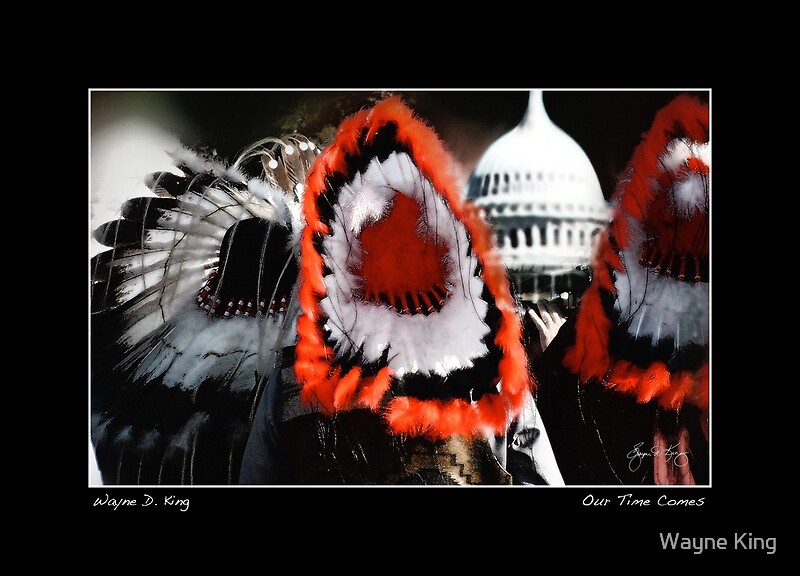
Our Time Comes


Here is the first question I asked myself (hey give me a break I'm Iroquois!) How does the value of the land taken from Native American people in the conquest of the US relate to GNP today?

As far as I know, no one has done extensive academic research on this topic and for good reason. It would be almost impossible - without Big Data and a powerful computer - to figure out, given differing land values and differing time tables, to say nothing of the fact that knowing when a land transaction was actually voluntary (not very often). On the other hand there is enough data out there to do a "back of the envelope" calculation generally, so here goes:

Using very rough estimates and not including the land taken from Native American people prior to 1776 and also not including improvements on the land such as the towns established in Georgia and the Carolinas by tribes like the Cherokee. It is generally understood that since 1776 Native Americans have been moved from lands totaling 1.5 Billion acres to a small set of reservations dotted around the country. If you simply use the general value of an acre of land prior to the Gold Rush ($1.25) the 1.5 Billion acres had a rough value back then of 1.9 Billion dollars. Using another rough calculation, real dollar values, we can estimate that $1.00 in the early 1800s is roughly (very roughly as we have no data related to inflation before 1913) equivalent to about $49.00 today. Since we know that no land in California today sells for $49.00 per acre (Average 2012 California farm real estate values set an all-time record - $7200 per acre) we can be sure that this is a conservative number, the value of the theft of native lands is, at a minimum $87 Billion dollars. If we use the $7,200/acre value, the value - still conservative - is 10.1 Trillion dollars. A glance at an estimate of the total value of US land is $14.48 Trillion dollars. The numbers show a surprising correlation. While about 80% of the lands of America were taken from native people after 1776, the value of that land today represents 70% of the total value of "unimproved" real estate (land only) in the US.

OK but the way we measure the wealth of our nation is not by real estate value, its by GDP. So how do we figure out what portion of the nation's wealth has been generated from lands taken from Native American people?

Well, let's try this: 18% of GDP is generated by real estate activity. 70% of 18% is 12.6%. GDP in 2016 was 18.57 Trillion. 12.6% of 18.57T is 2.32 Trillion dollars or 12.5% of 2016 US GDP generated from the 1.5 Billion acres of land taken from Native Americans since 1776.

While this is a seat of the pants calculation - I suspect the actual numbers would be higher - and certainly subject to legitimate criticism as there are many variables in the cost and value of land across the USA, the point made is the same. A large portion of national wealth has grown from the lands that we expropriated from Native American Indians.

Native people have not sought reparations. The loss of culture and marginalization for them has been far more important and can never be remunerated. It would be a step in the right direction to at least recognize that a substantial portion of our bounty today can be attributed to the land their ancestors called home.


About Wayne D. King: Wayne King is an author, artist, activist and recovering politician. A three term State Senator, he was the 1994 Democratic nominee for Governor and most recently the CEO of MOP Environmental Solutions Inc., a public company in the environmental cleanup space.  His art is exhibited nationally in galleries and he has published three books of his images. His most recent novel "Sacred Trust" a vicarious, high voltage adventure to stop a private powerline, has been published on Amazon.com http://bit.ly/STPaper. He lives in Rumney at the base of Rattlesnake Ridge and proudly flies both the American and Iroquois Flags. His website is: http://bit.ly/WayneDKing
-=-=-=-=-=-=-=-=-=-=-=-=-

If you know of better sources for the information on the back of my "envelope" I'd love to find out about them so that I can update this information. If you disagree with my points, I'd like to hear you, especially if you have a well thought out response and not just a snarky or snide remark. Lets have an honest dialog and we'll all benefit from it. wdk


Monday, April 16, 2018

Preamble - Critical Thinking and the Paradox of History

Lessons from a Lifelong Student (and sometimes Teacher) of History
Wayne D. King

"Skepticism is the chastity of the intellect, and it is shameful to surrender it too soon or to the first comer: there is nobility in preserving it coolly and proudly through long youth, until at last, in the ripeness of instinct and discretion, it can be safely exchanged for fidelity and happiness."
George Santayana
US (Spanish-born) philosopher (1863 - 1952)

History and politics must be approached with a large dose of skepticism whether from the left or the right because, after all, history is generally written by the "winners" whether their cause was just or not. While I may have coined, or simply adopted, the phrase "The Paradox of History" neither the phrase itself, nor the thought, is unique or original.

Economist John Maynard Keynes coined the phrase the “Paradox of Thrift” to describe that point in a recession when the public is inclined to save as much as possible and spend as little as possible, while at the same time massive spending is the only way to alleviate the economic peril that the country faces. The Paradox of history is simply that history is written by the “winners” who have a vested interest in the narrative, while at the same time, history's greatest benefit to us is what might be learned from an unbiased narrative that provides us an opportunity to see both the good and bad in its events, personas and results. Stated more eloquently by Gordon Craig, “the duty of the historian is to restore to the past the options it once had.”

So, therefore, a good teacher's first responsibility to his or her students is to convince them that they should believe as little as possible of what he or she is about to tell them. Let's call that the "educators corollary" to the Paradox of History.

Having admitted to complete and utter fallibility, a good teacher must then impart his/her knowledge assertively, as if no other source was closer to the oracle of knowledge and truth.

A worthy teacher, then, seeks not to serve answers or truths but to urge students toward the development of critical thinking skills and a healthy skepticism, from which they can derive their own narrative.

This does not in any way alleviate the burden upon you, the student. Quite the contrary in fact - it imposes a larger responsibility because you must find a way to demonstrate a modicum of deference to my years of experience and knowledge while, at the same time, double checking the veracity of everything you learn from me.
One of the first things that you will learn is that a good critical thinker does not mistake opinion or "common sense" for fact. Opinion, after all is just that; one person’s view of something. Common sense, that stalwart beacon of logic and wisdom with which your elders have urged you to imbue your thoughts and behavior, is an even more devilish force because it is empowered by the vast influence of majority thought.

Stephen Hawking, in his extraordinary "Science in the New Millennium" speech, said “. . . common sense is just another name for the prejudices that we have been brought up with.”
Facts, on the other hand, as Mark Twain said, are "stubborn things" they may stand by themselves or they may be turned into thought, but without them thought has no basis in reality; and, ultimately, no power.

So, as we begin this adventure, make it your goal to keep both your eyes and your mind wide open. Take joy in the moments in which your notion of the world is turned upside down because that is the surest sign that something useful is happening to you.

The Best Leader
Snow River

A leader is best
When people barely know
That he exists,

Less good when
They obey and acclaim him,
Worse when
They fear and despise him.

Fail to honor people
And they fail to honor you.

But of a good leader,
When his work is done,
His aim fulfilled,
they will all say,
'We did this ourselves.’

Lao-Tzu
Chinese philosopher
Wayne D. King

Sunday, April 15, 2018

Lessons from Geese

Colors in a Borealis Flyway

Taken from a Speech by Angeles Arrien and based on the works of Milton Olson

Fact 1
As each goose flaps its wings it creates an “uplift” for the birds that follow, By flying in a v formation, the entire flock adds 72 percent greater flying range than if a bird flew alone. LESSON : People who share a common direction and a sense of community can get where they are going quicker and easier because they are traveling on the thrust of one another.

Fact 2
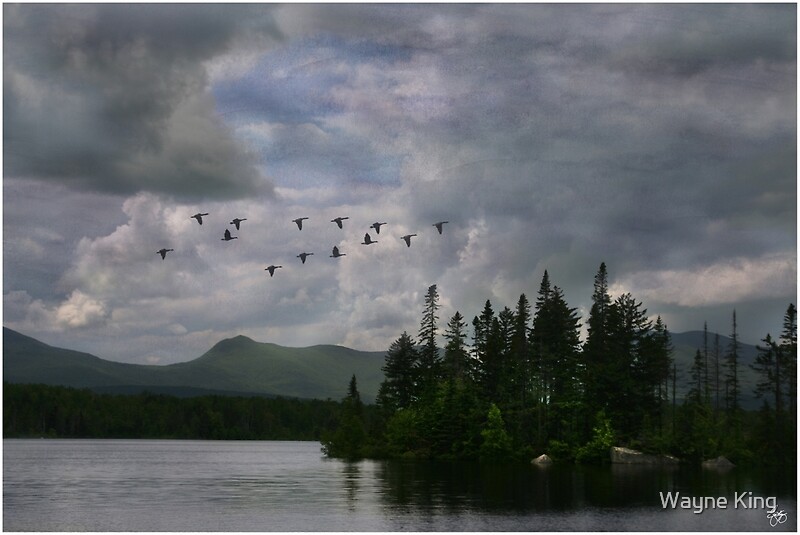
Goose Over Stinson Lake

When a goose falls out of formation, it suddenly feels the drag and resistance of flying alone. It quickly moves back into the formation to take advantage of the lifting power of the bird immediately in front of it. LESSON: If we have as much sense as a goose we stay in formation with those headed where we want to go.

Fact 3
When the lead goose tires, it rotates back into the formation and another goose flies the point position. LESSON: It pays to take turns doing the hard tasks and sharing leadership. As with geese, people are interdependent on each other’s skills, capabilities and unique arrangements of gifts,, talents and resources.

Fact 4
The geese flying in formation honk to encourage those up front to keep going. LESSON: We need to make sure our honking is encouraging. In groups where there is encouragement, the production is much greater.

Fact 5
When a goose gets sick, wounded or shot down, two geese drop out of formation and follow it down to help and protect it. They stay with the wounded goose until it is able to fly or dies. Then they launch out with another formation or catch up with their flock. LESSON: If we have as much sense as geese we will stand by one another in difficult times as well as when we are strong.


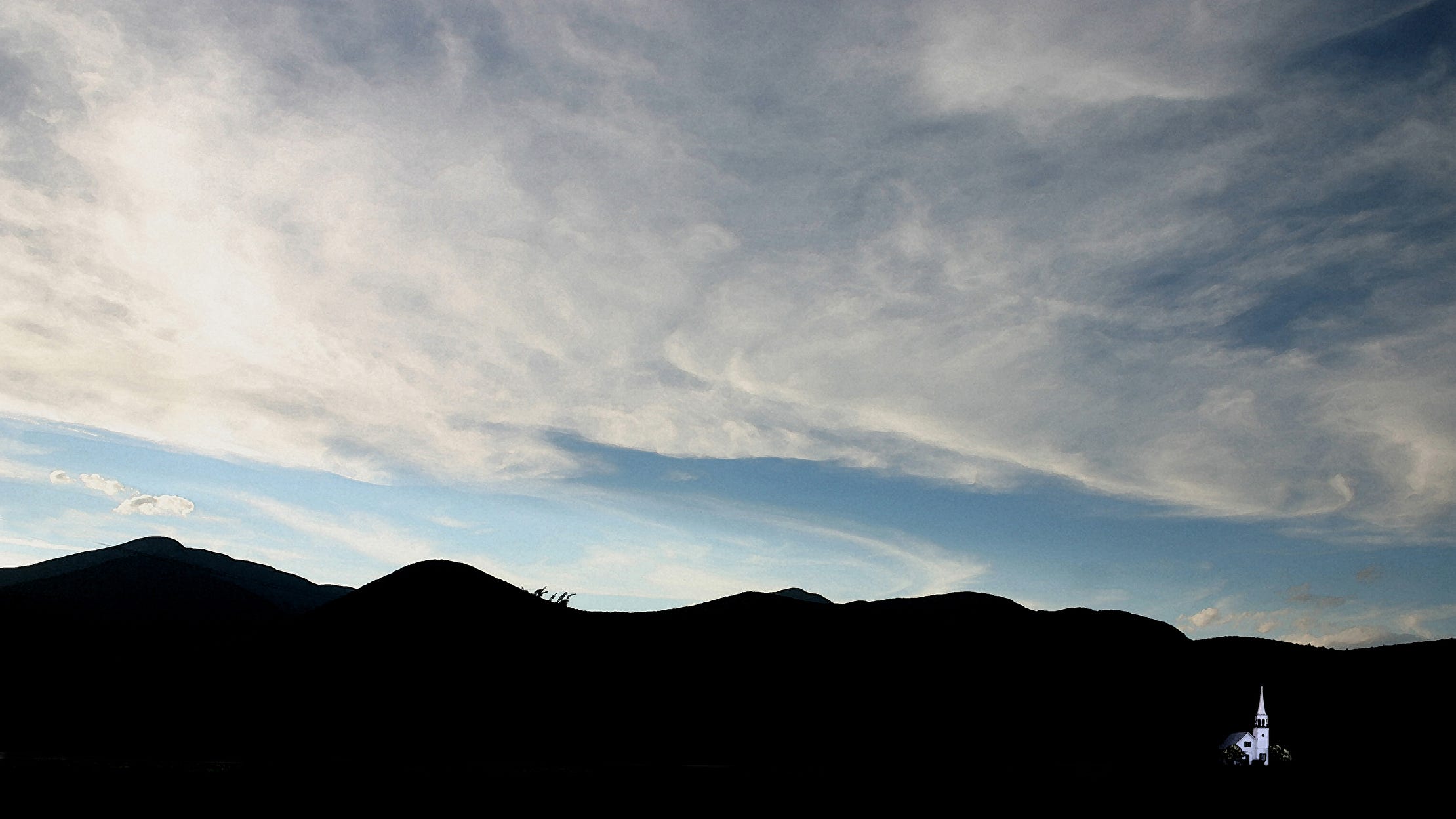
Painted Sky Over Jericho Lake

Friday, April 13, 2018

Adopt an Image and Raise Money for Your Non Profit or Small Business


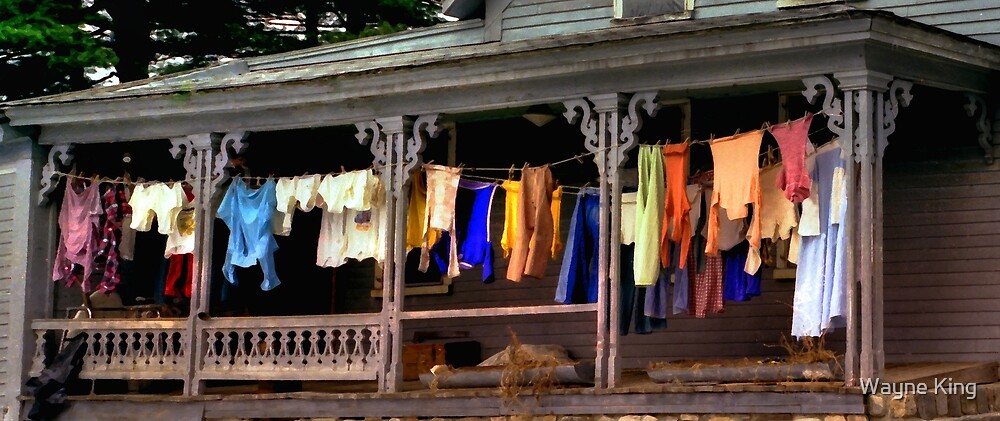
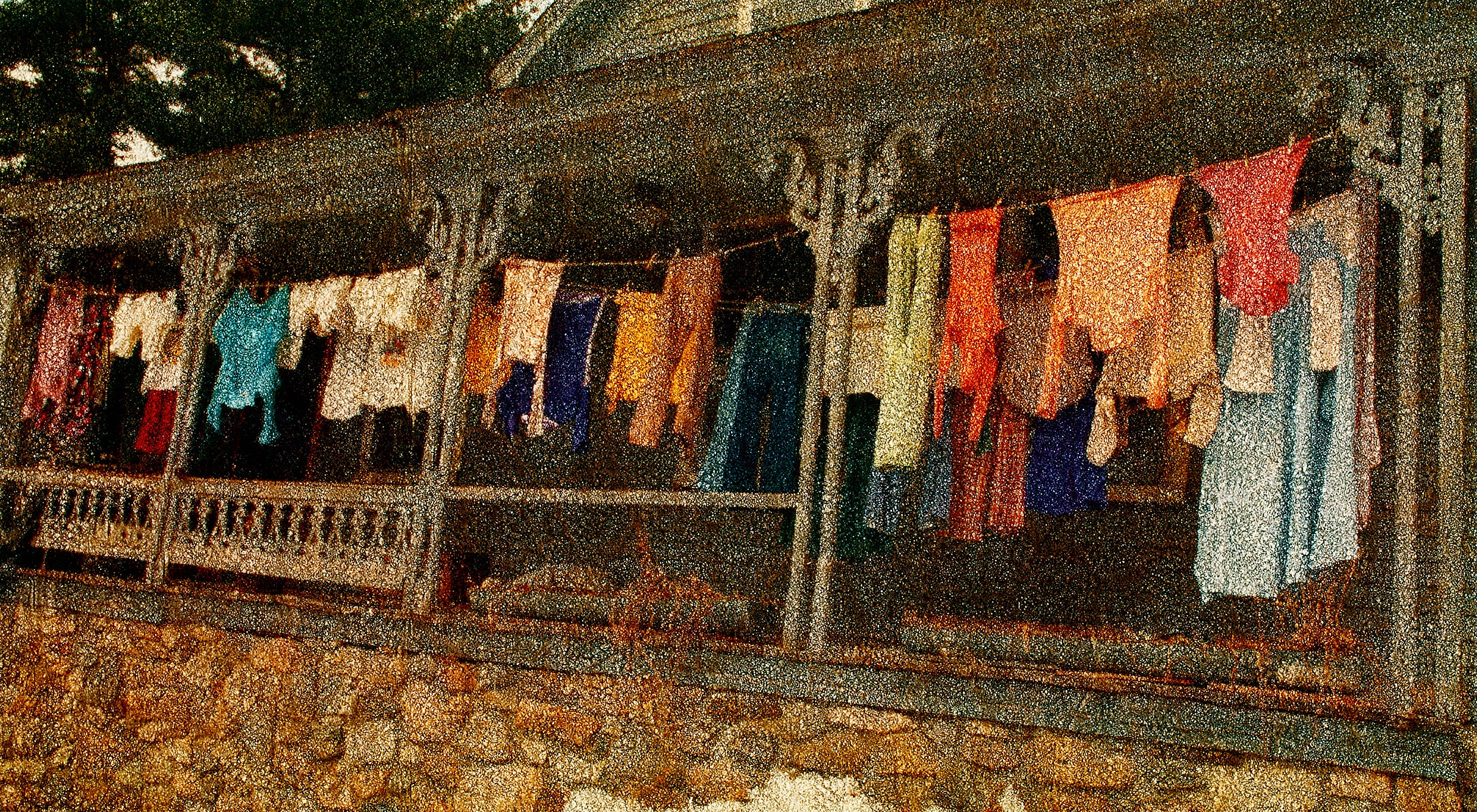
Alton Washday Expressions

Alton Washday Expressions

Produced by special request in an affordable limited edition of 100 signed and numbered originals for the good folks at the Rumney Village Store - that would be George & Sheila - a beautiful 8" x 20" signed image with a certificate of authenticity. You can purchase this original art for just $95.00 at the Rumney Village Store on Main Street in Rumney, New Hampshire. If it's too far to travel and you'd still like an original signed print, you can order it right here and we'll see to it that the Rumney Village Store gets credited - but you can save the cost of shipping by stopping by RVS and buying it directly and maybe purchasing one of their great deli offerings! or grab a copy of Sacred Trust 😉 . http://bit.ly/AltonEXP

As a way to support local businesses and nonprofits I have created this Adopt-an-Image program. If you or your nonprofit have an interest in adopting your favorite image its easy, just click here: http://bit.ly/AdoptImage 


Friday, March 30, 2018

Weaving Truth into Fiction - Wayne King’s Novel “Sacred Trust” Reveals Long-Held NH Senate Secret

In a move likely to raise the hairs on the back of your neck former State Senator Wayne D. King has used the vehicle of his new novel “Sacred Trust” to unveil a long-held secret involving a group of State Senators, arrested while driving North in the Southbound lane of Interstate 93 after a long night of drinking at the famed Highway Hotel in Concord.

“Most of the people in the story are no longer living, after all it did happen in the early 1980s,” said King when asked about this recently at a book signing. “The story was recounted to me by a Senate colleague who was a part of the whole fiasco so I’m confident that it actually happened, though there’s no way to know just how much he embellished the tale.”

In “Sacred Trust” King, who was the 1994 Democratic Gubernatorial nominee, weaves a story with a familiar ring . . . the clash of ordinary people who transform into extraordinary heroes while confronting money and power in an epic battle to protect the land they love.

“Sacred Trust” is the tale of a rollicking campaign of civil disobedience against a private powerline, pitting nine unlikely environmental patriots from across the political spectrum calling themselves “The Trust”, against the “Granite Skyway” transmission line and its powerful, well-connected consortium of investors.
Longview Flowers 

With an obvious deep fondness for both the people and the land, King weaves a fast-paced tale filled with both real and fictional stories from the political world and life in the Granite State. In a rich tableau that includes sometimes hilarious and sometimes hair-raising stories including that of the “wrong way Senators”; Doctors sneaking a pregnant Llama into a hospital surgical ward for ACL surgery; A bear and a boy eating from the same blueberry patch atop Mount Cardigan as his father, the Ranger, watches helplessly from the firetower, and much more, King stitches together six decades of stories from New Hampshire life and politics.

Woven into the story are two simultaneous threads, in addition to the story line, adding substance to the pure joy of the story:

Essays written by fictional icons who, in the style of the Federalist Papers, defend the actions of “The Trust” and make the intellectual case against the Powerline, covering everything from protest and civil disobedience in a post 9-11 world to the path forward to a carbon free energy future; and a feature series written by a business journalist named Kitchen who documents New Hampshire’s key role in the birth of the renewable energy revolution and the choices faced by the nation, and the world, in light of the challenges posed by a changing climate.

The story of the “wrong way Senators”, now that it is revealed, is one that will surely live on in the lore of the Senate. Just how it was the story never became a matter of public record is recounted in chilling detail in the pages of King’s book.

King is currently working on an interactive text iBook that examines the key issues explored in “Sacred Trust”. The iBook will be free, The author hopes that teachers and professors will find that reading the book will be both a pleasant experience and grist for debate and discussion among students.


“Sacred Trust” Paperback:
354 pages
Publisher: CreateSpace Independent Publishing Platform
ISBN-10: 1981490302
http://bit.ly/STPaper
Price: $14.95*

Sacred Trust Kindle eBook
http://bit.ly/STrust
Price: $2.99*

thesacredtrust.blogspot.com/

* Special discounts are available to schools, libraries, and nonprofits. Please contact 603-515-6001

Call the above number to schedule a reading and signing

Monday, March 19, 2018

Finding the Center - Reversing the Hollowing of the Political Center in America

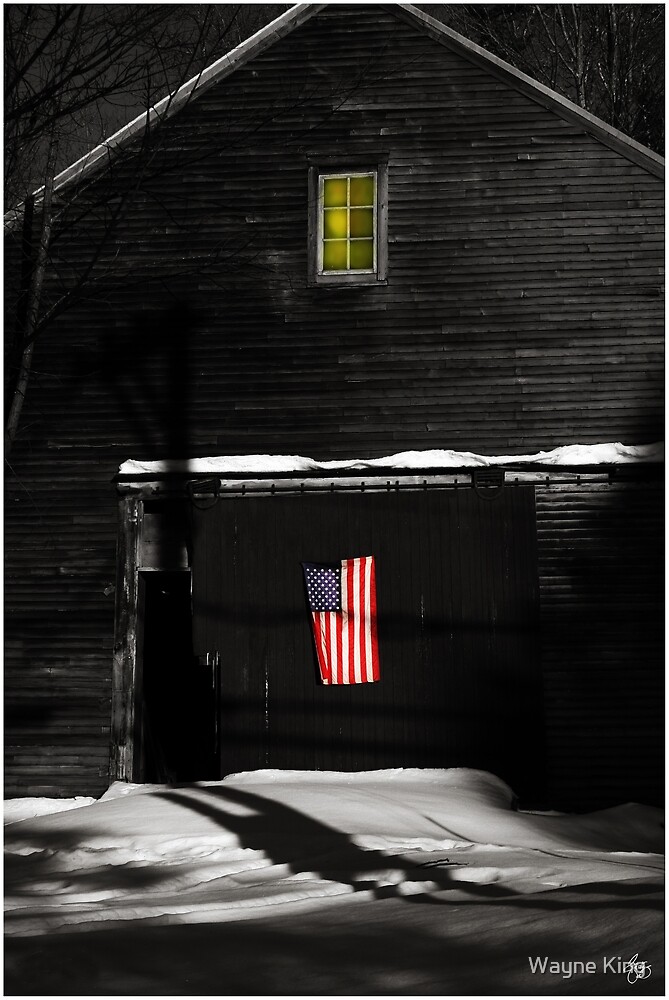
Secrets of the Patriot
Signed originals — Unsigned open-edition

“Ain’t nothing in the middle of the road but yellow lines and dead armadillos”

~ Jim Hightower

Back in the 80s when he coined his famous phrase, it was fine for Jim Hightower to declare that there “Ain’t nothing in the middle of the road but yellow lines and dead armadillos” when it was a satirical jab at moderate politicians in the midst of robust debate across the political spectrum, but the hollowing of the political center in America now threatens to collapse the system on itself like a political black hole.

Of course, it is true that the margins define where the middle lies, and for at nearly three decades, there has been a gradual movement of the political center to the right.

This is not, in and of itself, unusual. Shifting fortunes of political parties have a long tradition in the American political landscape, often - but not always - for good reason. The problem was that the Republican Party was not satisfied with simply gaining ground. Instead, they smelled an advantage and decided that moving the goalpost itself was to be their endgame. They began first by violating two of the most sacred norms of American politics during the last one hundred years.

Morning Light

Signed Originals. — Unsigned Open Edition Prints

In their groundbreaking book “How Democracies Die” authors Steven Levitsky and Daniel Ziblatt deconstruct the modern day process by which Democracies descend into totalitarianism; not by military takeover, violence or assassination but rather by the election of politicians who allow or collude to create a gradual erosion of what they call the “soft guardrails of democracy” These are the institutional norms that reflect our shared American Voice . . . the spirit of our system and the laws that govern us. Levitsky and Ziblatt label these norms “Mutual Toleration” and “Institutional Forbearance”.

Mutual Toleration is the norm, or belief, that our political adversaries are NOT our enemies, that they love their country just as deeply, and, while they may see the world differently, we accept their legitimacy and their right to govern if they prevail within a fair and democratic process.

Institutional Forbearance, its twin norm in a successful and strong democracy, is the political restraint to live within both the letter and the spirit of the law and to avoid overreaching that strains the bonds of our common beliefs.

A strong and successful democracy has a broad range of voices that make their case strongly and loudly, even joyously, but respect the people and their right to decide within the marketplace of ideas, who will represent them.

Just as important, those in power exercise restraint and do not abuse the system to seek unfair advantage through technically legal processes that are outside the spirit of the law. When the governing party uses tactics like partisan gerrymandering that give them an excessive advantage, voter suppression in the guise of “election reform” that makes it harder for certain groups of Americans to vote; or holds up the appointment of a Supreme Court Justice, as the Republican Senate and leader Mitch McConnell did with Judge Merrick Garland.

These things begin to create an atmosphere of hostility that can spiral out of control; An environment where not only is one party violating the spirit of the law, but the opposition party is tempted to abandon these norms themselves.

We are now seeing the results. The result, if the opposition succumbs to this inclination, is extreme polarization. One of the greatest challenges before us now, if we are to regain some semblance of a rule-of-law Republic, will be how to temper this inclination, without ignoring the destruction wrought by MAGA over the decade.

Over more than twenty years, both the Republican Party and the Democrats have abandoned these norms. Republicans struck first in 1994 when they abandoned all pretense of mutual respect and used the language of hate to drive their “Contract with America”.

Democrats struck back during the tenure of Barack Obama, albeit less aggressively, and largely due to the hostility of the Republican response to Obama’s election. This was done through Presidential Executive Orders.

The result has been polarization unlike anything that any of us has seen in our lifetimes. This polarization has been exacerbated by the balkanization of the media landscape, with the rapid growth of conservative talk radio and Fox TV, and a similar, though again not as dramatic, shift among other media, like MSNBC, on the other side.

The polarization of the parties and the balkanization of the media has spread like a contagion through the country, taking advantage of the growing desperation of a large number of Americans, many of them white working class, who see their real income shrinking.

Ironically, immigrants and people of color, who have and continue to unjustly bear the blame, were experiencing the same erosion of their lives. The major difference is that they were already marginalized within the economy. For hard-working white folks, this was something new and alarming.

The alarming and growing wealth inequality gap in our country.

Washday Alton NH
Signed Original Prints — Unsigned Open Edition Prints

“Seeds of hatred and division that fall on fallow ground whither and die, but sow those seeds on fertile ground and they take root and grow.

This is where Levitsky and Ziblatt missed - or possibly bypassed - the most important reason for the perilous divisions in our country right now. The alarming and growing wealth inequality gap in our country. Wages and net worth of the bottom 90% of Americans have been stagnant since 1973. That’s right, decades of effectively losing ground.

Today, the richest 1% of Americans control more of the wealth in America than they have in 50 years. More than 40% of the wealth of the country is in the hands of just 1% of our population. Nearly 80 percent of wealth is vested in the top 10% of Americans.

If middle-class wages and those of the precariat* had been rising during that time, even just keeping pace with the cost of living, then politicians would not have been able to stoke resentment of immigrants and people of color because, after all, they were just chasing the American dream like everyone else, right?

Yet, as the wealth gap has grown, so too has the fear and resentment of the “other,” and with Republicans ignoring them in favor of the wealthy and Democrats playing identity politics to try to stay even, working-class Americans of all colors have paid the price.

Seeds of hatred and division that fall on fallow ground whither and die, but sow those seeds on fertile ground and they take root and grow. Over the past twenty years or more, the ground has grown more and more fertile. As income disparity has grown, more and more of our fellow Americans have found themselves having to work harder and longer just to stay afloat, and many are finding it impossible. Technology has hit them like an Abrams Tank. If the shell of shrinking wages doesn’t find its mark, the twin treads of job obsolescence and artificial intelligence surely will.

Wonalancet Mindscape
Signed originals. — Open Edition Prints (unsigned)

Exacerbating this is the decline of American social capital, disconnecting us from community and from one another, particularly limiting our exposure to people who are different from us for any reason. This is a phenomenon described as “Bowling Alone” by social theorist Robert Putnam.

In fairness to the authors quoted so extensively above, perhaps they chose to ignore the role of wealth inequality in creating the crisis we face because the roots of this problem go so deep and are so seemingly intractable that they wanted to focus on the things we could do more immediately to stem the bleeding in our Republic. I understand this, but I also believe that it is the deepest taproot of this tree, and if the tree of Liberty and prosperity is to flourish again in America, we will have to confront it - and soon. Not in another twenty years, when it may be too late.

Nevertheless, since I will be addressing this issue much more in future columns, I will stand down from my soapbox and try to address some shorter-term solutions to the challenge of halting the “Hollowing of the American Middle” and restoring the center again.

A Simple Twist of Fate
Signed Originals — Unsigned Open Edition Prints

“There is nothing wrong with having a broad range of thinkers in a political party; in fact, it is healthy, but like two shores divided by a great river flowing into the future, there must be a bridge that joins the two sides. This has been the most important role of centrists in politics.” ~ WDK

The Birth of ‘Primarying”

The deep polarization within our political system has spawned at least one other notable phenomenon worth mentioning. Not content to have gained serious ground by ignoring ``critical norms that have guided us for more than 100 years the Republicans did something that all those sinking into the sands of tyranny do, they turned on those in their own ranks whose loyalty was “questionable”. They turned on their own centrists - those “disloyal” Congressmen and Senators who had the unmitigated gall to believe that members of the other party were not monsters but the loyal opposition - sweeping most of them from office through the noun they have verbified as “primarying”.

There is nothing wrong with having a broad range of thinkers in a political party; in fact, it is healthy, but like two shores divided by a great river flowing into the future, there must be a bridge that joins the two sides. This has been the most important role of centrists in politics. They have been the bridge that sees good ideas wherever they come from, working to bring the two sides together for the good of all.

If we do not restore the center in American politics, we will surely witness what may be the unraveling of the American Republic, caught up in an endless cycle, lurching from left to right until one party or the other decides to put country ahead of political gain, or we self-destruct.

So what, then, do we do? (while we are working on that thorny income gap problem!)

First, we sing out in the American Voice. Each of us must hold those running for any office accountable. We must ask tough questions, and we must expect that they will have answers to how we might heal our country again. The specific answers are less important than the clear indication that each has given serious thought to the matter.

If the next elections are, in fact, the blowout for Democrats that is being forecast, the Democrats need to understand that this will not be a mandate for them. It will be because the “Coalition of the Decent” - as described by then-Republican operative Steve Schmidt - has risen up to wrest the country from the clutches of despotism.

The Democrats’ challenge, as painful as it may be, will be to show the country what it looks like when adults are running the government... to model mutual tolerance and exercise forbearance. As Nelson Mandela put it “to surprise our adversaries”. If they can do this, despite the challenges, they will capture enough of that coalition to be successful in the future.

As sympathetic as I am to those who say that Democrats should fight like Republicans, that will only make the problem worse and probably assure that the pendulum will swing back in next election . . . and you know what that means.

In the longer term, we will have to take other steps to restore the center. Here are some of the things I would suggest:

End Partisan Gerrymandering:

Since the day when Massachusetts Governor Elbridge Gerry’s last name was annexed to the “salamander” descriptor given to one of the districts redrawn to benefit his political party back in 1812, It has been a common practice for political parties who find themselves in power during the term following a census to redraw the election map in their favor. Where Gerrymandering that disadvantages racial groups has been declared unconstitutional by the United States Supreme Court, “Partisan Gerrymandering” has - until recently - been accepted as a part of the spoils of political victory. This has now come under fire for good reasons. Throughout the country, a fairly dramatic disconnect has developed between the political choices of voters and the outcome of elections. Partisan Gerrymandering, it is said, has created a situation where voters do not choose their representatives in elections but rather Representatives choose their voters when district lines are drawn.

Looking back to 2012 it’s instructive to view the case of Wisconsin which was particularly telling.

In 2012 Wisconsin Democrats racked up 174,000 more votes for the state legislature - called “The Assembly” - than Republicans. Yet Republicans ended up with 61% of the seats in the Assembly . . . with only 49% of the votes, Democrats with 51% of the votes won less than 40% of the seats in the Assembly.

Both parties should have been incensed by this because the system was just as likely to provide Democrats with the opportunity to stack the deck as Republicans and they were, sadly, just as willing to take advantage.

By any measure, this is wrong and it would be if the parties were reversed. If you believe in the principle of one person one vote, this system defies that principle and effectively creates a rigged election. The Supreme Court ultimately sidestepped the question - as they had done in a similar case in 2003, they punted.

We should not wait for the Supreme Court. Efforts already undertaken by states like California and Arizona, arguably the most liberal and conservative states in the Union, have demonstrated that independent and balanced commissions can dramatically reduce the level of partisanship in their elected bodies. In addition to these commissions, several other innovative methodologies have been developed both here and in other nations that can and should be considered.

Reform of this political Gerrymandering will need to be undertaken by Congress.

Moving to Ranked Vote Balloting:

How often have you cast a vote when you felt that, aside from your choice of candidate, there were others who would do a perfectly respectable job? Ranked Voting, sometimes also referred to as Instant Runoff Voting, is a system of voting where the ballot allows the voter to rank the candidates in order of preference. If no candidate receives a majority of the vote, then second and third choices are considered, using a system for allocating those votes until one candidate or another achieves a majority. There are also systems employed in other countries that are specifically designed to address both voting and gerrymandering problems.

With Ranked Voting candidates can no longer count only on their “base” for an election victory - often at substantially less than a majority - but instead must be concerned about those voters who might see them as a second choice. Forcing them to be more specific about their positions on issues and tamping down the inclination to use negative campaigning as a political tactic.

The Ranked Vote system of balloting gives the voter the opportunity to not only vote for the candidate of their choosing but also to cast an additional vote for one or more of their choices in their order of preference. Both voters and candidates in places where Ranked Voting is being employed say that it give moderates, and even Independents, a fair shot at the nomination or the seat and it reduces negative campaigning, with candidates concerned that negative attacks on their opponents will affect their weighted total of votes.

An unintended but consequential result of such a system would also be that it will make meddling in our elections much more difficult for the Russians or any other nation intent on doing harm to the American Republic, even that 400 pound fat guy sitting on his bed.

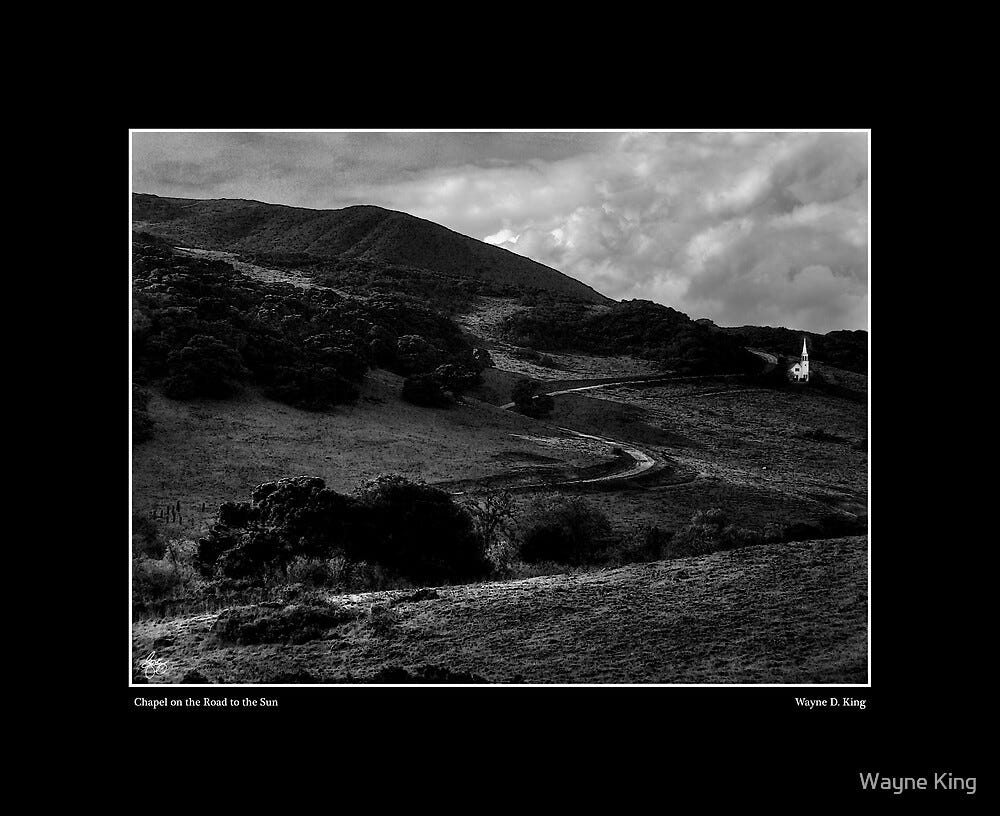
Chapel on a Road to the Sun Monochrome Poster

Money in Politics:

The deleterious effect of the “Citizens United” decision by the Supreme Court has been well documented. While I don’t foresee a change of heart among the members of the court at any time soon, we should continue to push for reforms that limit the effects of big money on the outcomes of political races. The suggestions above will have a significant effect in this area but money in politics is an insidious force, akin to rainwater on a leaky roof. If one avenue to enter the house is repaired the water will seek out other paths.

After thoughts:

Finally, though I might lose you on one or both of these, we might also consider a few other things. Encouraging the Senate - by whatever means - to bring back the old style filibuster instead of the nonsense that now passes for a filibuster. If all those Senators with their failing prostates had to actually stand up and debate for hours on end to hold up a bill I’ll wager we’d have very few filibusters.

A serious and substantive discussion about lowering the voting age to 16 instead of 18 is also in order. Ten other countries now permit it. In Scotland the Parliament passed the franchise to vote for 16 and 17 year-olds unanimously after successfully testing the premise during their referendum on independence.

In the last few years our kids have taught us a lot about what it means to be a good citizen. Maybe it’s time to say that if they can teach us to be good citizens, they can vote as well. We allow 16-year-olds to get married - they should be able to vote. They can’t do any worse than we have, and I suspect they would do a whole lot better. . . and by the way, any party that thinks they could count on their votes is in for a rude awakening - these kids are not going to be partisan. They scoff at the notion that any political party has a monopoly on good ideas or moral authority. If they get the franchise, you best sharpen your rhetorical skills.

You may have noticed that I have not once in this column mentioned the current President I have said it before. . . he is not the cause of the crisis in our Republic; he is a symptom. As Pogo said in the now oft-cited quote from Walt Kelly’s famous comic strip, “We have met the enemy, and he is us.”

Footnotes

*Working class and poor - advancing quickly into the middle class


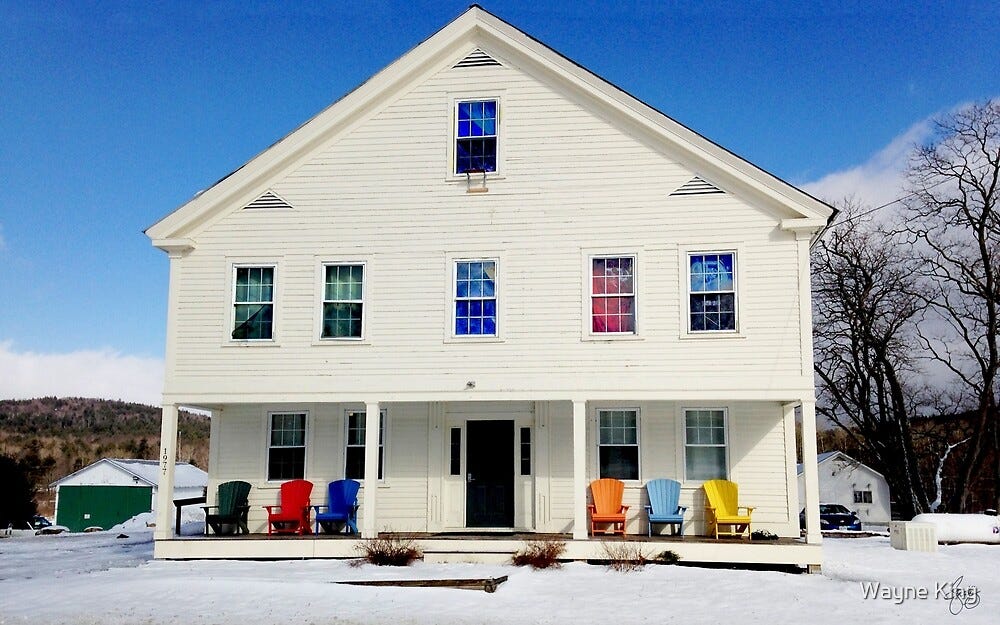
Colors of a Pike NH Home

Signed Originals — Unsigned Open Edition Prints


About Wayne D. King: Wayne King is an author, artist, activist and recovering politician. He was a three-term State Senator, who chaired the Senate Economic Development Committee and the NH Senate Economic Summit. In 1994 King was the Democratic nominee for Governor and most recently the CEO of MOP Environmental Solutions Inc., a public company in the environmental cleanup space. His art is exhibited nationally in galleries and he has published three books of his images. His most recent novel “Sacred Trust” a vicarious, high voltage adventure to stop a private powerline has been published on Amazon.com as an ebook or in paper. He lives in Bath, NH. 


Hope From A Mystic Portal - The Journey of Artemis II

  Hope From A Mystic Portal - The Journey of Artemis II For a brief time, all Americans' eyes have been trained on the heavens. Now, as ...