“Ain’t nothing in the middle of the road but yellow lines and dead armadillos”
~ Jim Hightower
Back in the 80s when he coined his famous phrase, it was fine for Jim Hightower to declare that there “Ain’t nothing in the middle of the road but yellow lines and dead armadillos” when it was a satirical jab at moderate politicians in the midst of robust debate across the political spectrum, but the hollowing of the political center in America now threatens to collapse the system on itself like a political black hole.
Of course, it is true that the margins define where the middle lies, and for at nearly three decades, there has been a gradual movement of the political center to the right.
This is not, in and of itself, unusual. Shifting fortunes of political parties have a long tradition in the American political landscape, often - but not always - for good reason. The problem was that the Republican Party was not satisfied with simply gaining ground. Instead, they smelled an advantage and decided that moving the goalpost itself was to be their endgame. They began first by violating two of the most sacred norms of American politics during the last one hundred years.
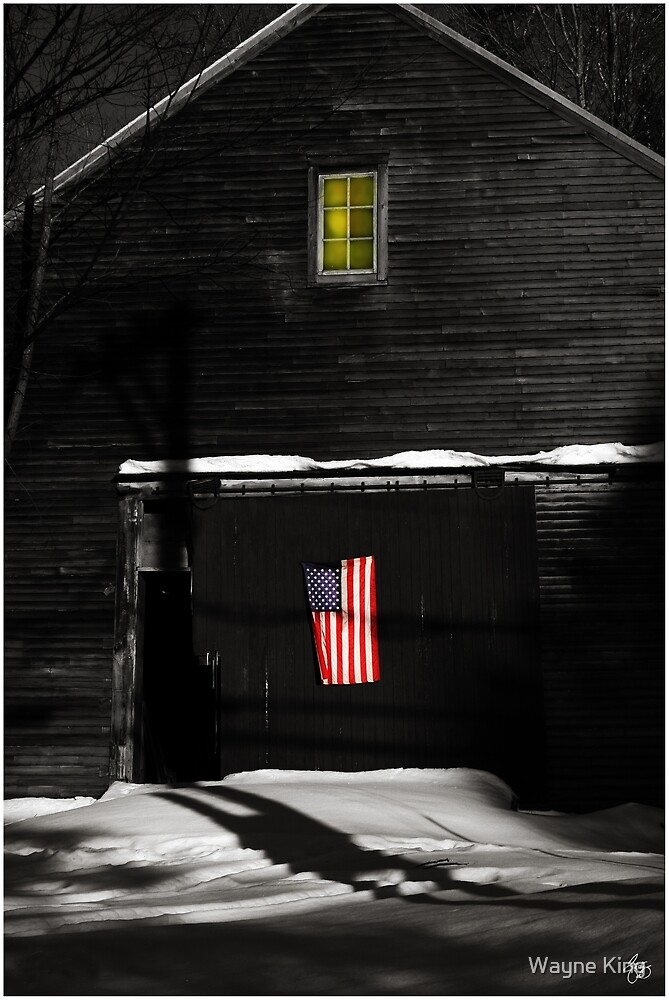
Morning Light
Signed Originals. — Unsigned Open Edition Prints
In their groundbreaking book “How Democracies Die” authors Steven Levitsky and Daniel Ziblatt deconstruct the modern day process by which Democracies descend into totalitarianism; not by military takeover, violence or assassination but rather by the election of politicians who allow or collude to create a gradual erosion of what they call the “soft guardrails of democracy” These are the institutional norms that reflect our shared American Voice . . . the spirit of our system and the laws that govern us. Levitsky and Ziblatt label these norms “Mutual Toleration” and “Institutional Forbearance”.
Mutual Toleration is the norm, or belief, that our political adversaries are NOT our enemies, that they love their country just as deeply, and, while they may see the world differently, we accept their legitimacy and their right to govern if they prevail within a fair and democratic process.
Institutional Forbearance, its twin norm in a successful and strong democracy, is the political restraint to live within both the letter and the spirit of the law and to avoid overreaching that strains the bonds of our common beliefs.
A strong and successful democracy has a broad range of voices that make their case strongly and loudly, even joyously, but respect the people and their right to decide within the marketplace of ideas, who will represent them.
Just as important, those in power exercise restraint and do not abuse the system to seek unfair advantage through technically legal processes that are outside the spirit of the law. When the governing party uses tactics like partisan gerrymandering that give them an excessive advantage, voter suppression in the guise of “election reform” that makes it harder for certain groups of Americans to vote; or holds up the appointment of a Supreme Court Justice, as the Republican Senate and leader Mitch McConnell did with Judge Merrick Garland.
These things begin to create an atmosphere of hostility that can spiral out of control; An environment where not only is one party violating the spirit of the law, but the opposition party is tempted to abandon these norms themselves.
We are now seeing the results. The result, if the opposition succumbs to this inclination, is extreme polarization. One of the greatest challenges before us now, if we are to regain some semblance of a rule-of-law Republic, will be how to temper this inclination, without ignoring the destruction wrought by MAGA over the decade.
Over more than twenty years, both the Republican Party and the Democrats have abandoned these norms. Republicans struck first in 1994 when they abandoned all pretense of mutual respect and used the language of hate to drive their “Contract with America”.
Democrats struck back during the tenure of Barack Obama, albeit less aggressively, and largely due to the hostility of the Republican response to Obama’s election. This was done through Presidential Executive Orders.
The result has been polarization unlike anything that any of us has seen in our lifetimes. This polarization has been exacerbated by the balkanization of the media landscape, with the rapid growth of conservative talk radio and Fox TV, and a similar, though again not as dramatic, shift among other media, like MSNBC, on the other side.
The polarization of the parties and the balkanization of the media has spread like a contagion through the country, taking advantage of the growing desperation of a large number of Americans, many of them white working class, who see their real income shrinking.
Ironically, immigrants and people of color, who have and continue to unjustly bear the blame, were experiencing the same erosion of their lives. The major difference is that they were already marginalized within the economy. For hard-working white folks, this was something new and alarming.
The alarming and growing wealth inequality gap in our country.
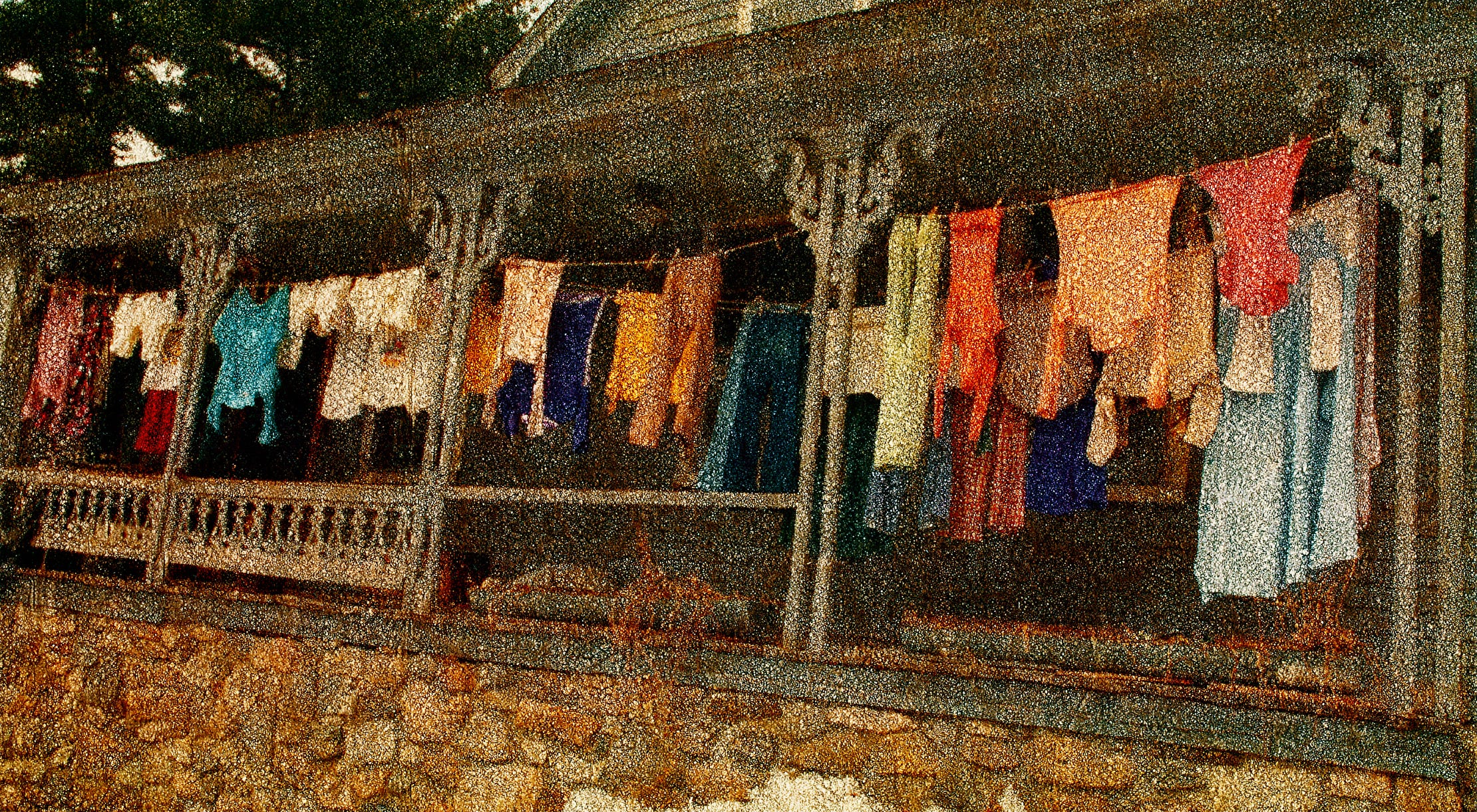
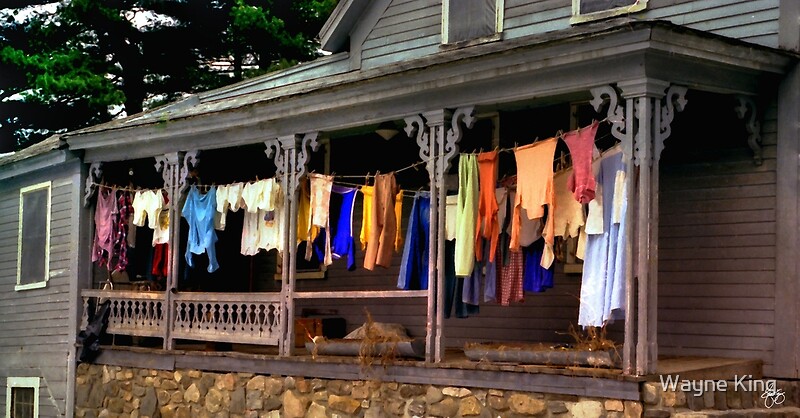
Washday Alton NH
Signed Original Prints — Unsigned Open Edition Prints
“Seeds of hatred and division that fall on fallow ground whither and die, but sow those seeds on fertile ground and they take root and grow.
This is where Levitsky and Ziblatt missed - or possibly bypassed - the most important reason for the perilous divisions in our country right now. The alarming and growing wealth inequality gap in our country. Wages and net worth of the bottom 90% of Americans have been stagnant since 1973. That’s right, decades of effectively losing ground.
Today, the richest 1% of Americans control more of the wealth in America than they have in 50 years. More than 40% of the wealth of the country is in the hands of just 1% of our population. Nearly 80 percent of wealth is vested in the top 10% of Americans.
If middle-class wages and those of the precariat* had been rising during that time, even just keeping pace with the cost of living, then politicians would not have been able to stoke resentment of immigrants and people of color because, after all, they were just chasing the American dream like everyone else, right?
Yet, as the wealth gap has grown, so too has the fear and resentment of the “other,” and with Republicans ignoring them in favor of the wealthy and Democrats playing identity politics to try to stay even, working-class Americans of all colors have paid the price.
Seeds of hatred and division that fall on fallow ground whither and die, but sow those seeds on fertile ground and they take root and grow. Over the past twenty years or more, the ground has grown more and more fertile. As income disparity has grown, more and more of our fellow Americans have found themselves having to work harder and longer just to stay afloat, and many are finding it impossible. Technology has hit them like an Abrams Tank. If the shell of shrinking wages doesn’t find its mark, the twin treads of job obsolescence and artificial intelligence surely will.
Wonalancet Mindscape
Signed originals. — Open Edition Prints (unsigned)
Exacerbating this is the decline of American social capital, disconnecting us from community and from one another, particularly limiting our exposure to people who are different from us for any reason. This is a phenomenon described as “Bowling Alone” by social theorist Robert Putnam.
In fairness to the authors quoted so extensively above, perhaps they chose to ignore the role of wealth inequality in creating the crisis we face because the roots of this problem go so deep and are so seemingly intractable that they wanted to focus on the things we could do more immediately to stem the bleeding in our Republic. I understand this, but I also believe that it is the deepest taproot of this tree, and if the tree of Liberty and prosperity is to flourish again in America, we will have to confront it - and soon. Not in another twenty years, when it may be too late.
Nevertheless, since I will be addressing this issue much more in future columns, I will stand down from my soapbox and try to address some shorter-term solutions to the challenge of halting the “Hollowing of the American Middle” and restoring the center again.
A Simple Twist of Fate
Signed Originals — Unsigned Open Edition Prints
“There is nothing wrong with having a broad range of thinkers in a political party; in fact, it is healthy, but like two shores divided by a great river flowing into the future, there must be a bridge that joins the two sides. This has been the most important role of centrists in politics.” ~ WDK
The Birth of ‘Primarying”
The deep polarization within our political system has spawned at least one other notable phenomenon worth mentioning. Not content to have gained serious ground by ignoring ``critical norms that have guided us for more than 100 years the Republicans did something that all those sinking into the sands of tyranny do, they turned on those in their own ranks whose loyalty was “questionable”. They turned on their own centrists - those “disloyal” Congressmen and Senators who had the unmitigated gall to believe that members of the other party were not monsters but the loyal opposition - sweeping most of them from office through the noun they have verbified as “primarying”.
There is nothing wrong with having a broad range of thinkers in a political party; in fact, it is healthy, but like two shores divided by a great river flowing into the future, there must be a bridge that joins the two sides. This has been the most important role of centrists in politics. They have been the bridge that sees good ideas wherever they come from, working to bring the two sides together for the good of all.
If we do not restore the center in American politics, we will surely witness what may be the unraveling of the American Republic, caught up in an endless cycle, lurching from left to right until one party or the other decides to put country ahead of political gain, or we self-destruct.
So what, then, do we do? (while we are working on that thorny income gap problem!)
First, we sing out in the American Voice. Each of us must hold those running for any office accountable. We must ask tough questions, and we must expect that they will have answers to how we might heal our country again. The specific answers are less important than the clear indication that each has given serious thought to the matter.
If the next elections are, in fact, the blowout for Democrats that is being forecast, the Democrats need to understand that this will not be a mandate for them. It will be because the “Coalition of the Decent” - as described by then-Republican operative Steve Schmidt - has risen up to wrest the country from the clutches of despotism.
The Democrats’ challenge, as painful as it may be, will be to show the country what it looks like when adults are running the government... to model mutual tolerance and exercise forbearance. As Nelson Mandela put it “to surprise our adversaries”. If they can do this, despite the challenges, they will capture enough of that coalition to be successful in the future.
As sympathetic as I am to those who say that Democrats should fight like Republicans, that will only make the problem worse and probably assure that the pendulum will swing back in next election . . . and you know what that means.
In the longer term, we will have to take other steps to restore the center. Here are some of the things I would suggest:
End Partisan Gerrymandering:
Since the day when Massachusetts Governor Elbridge Gerry’s last name was annexed to the “salamander” descriptor given to one of the districts redrawn to benefit his political party back in 1812, It has been a common practice for political parties who find themselves in power during the term following a census to redraw the election map in their favor. Where Gerrymandering that disadvantages racial groups has been declared unconstitutional by the United States Supreme Court, “Partisan Gerrymandering” has - until recently - been accepted as a part of the spoils of political victory. This has now come under fire for good reasons. Throughout the country, a fairly dramatic disconnect has developed between the political choices of voters and the outcome of elections. Partisan Gerrymandering, it is said, has created a situation where voters do not choose their representatives in elections but rather Representatives choose their voters when district lines are drawn.
Looking back to 2012 it’s instructive to view the case of Wisconsin which was particularly telling.
In 2012 Wisconsin Democrats racked up 174,000 more votes for the state legislature - called “The Assembly” - than Republicans. Yet Republicans ended up with 61% of the seats in the Assembly . . . with only 49% of the votes, Democrats with 51% of the votes won less than 40% of the seats in the Assembly.
Both parties should have been incensed by this because the system was just as likely to provide Democrats with the opportunity to stack the deck as Republicans and they were, sadly, just as willing to take advantage.
By any measure, this is wrong and it would be if the parties were reversed. If you believe in the principle of one person one vote, this system defies that principle and effectively creates a rigged election. The Supreme Court ultimately sidestepped the question - as they had done in a similar case in 2003, they punted.
We should not wait for the Supreme Court. Efforts already undertaken by states like California and Arizona, arguably the most liberal and conservative states in the Union, have demonstrated that independent and balanced commissions can dramatically reduce the level of partisanship in their elected bodies. In addition to these commissions, several other innovative methodologies have been developed both here and in other nations that can and should be considered.
Reform of this political Gerrymandering will need to be undertaken by Congress.
Moving to Ranked Vote Balloting:
How often have you cast a vote when you felt that, aside from your choice of candidate, there were others who would do a perfectly respectable job? Ranked Voting, sometimes also referred to as Instant Runoff Voting, is a system of voting where the ballot allows the voter to rank the candidates in order of preference. If no candidate receives a majority of the vote, then second and third choices are considered, using a system for allocating those votes until one candidate or another achieves a majority. There are also systems employed in other countries that are specifically designed to address both voting and gerrymandering problems.
With Ranked Voting candidates can no longer count only on their “base” for an election victory - often at substantially less than a majority - but instead must be concerned about those voters who might see them as a second choice. Forcing them to be more specific about their positions on issues and tamping down the inclination to use negative campaigning as a political tactic.
The Ranked Vote system of balloting gives the voter the opportunity to not only vote for the candidate of their choosing but also to cast an additional vote for one or more of their choices in their order of preference. Both voters and candidates in places where Ranked Voting is being employed say that it give moderates, and even Independents, a fair shot at the nomination or the seat and it reduces negative campaigning, with candidates concerned that negative attacks on their opponents will affect their weighted total of votes.
An unintended but consequential result of such a system would also be that it will make meddling in our elections much more difficult for the Russians or any other nation intent on doing harm to the American Republic, even that 400 pound fat guy sitting on his bed.
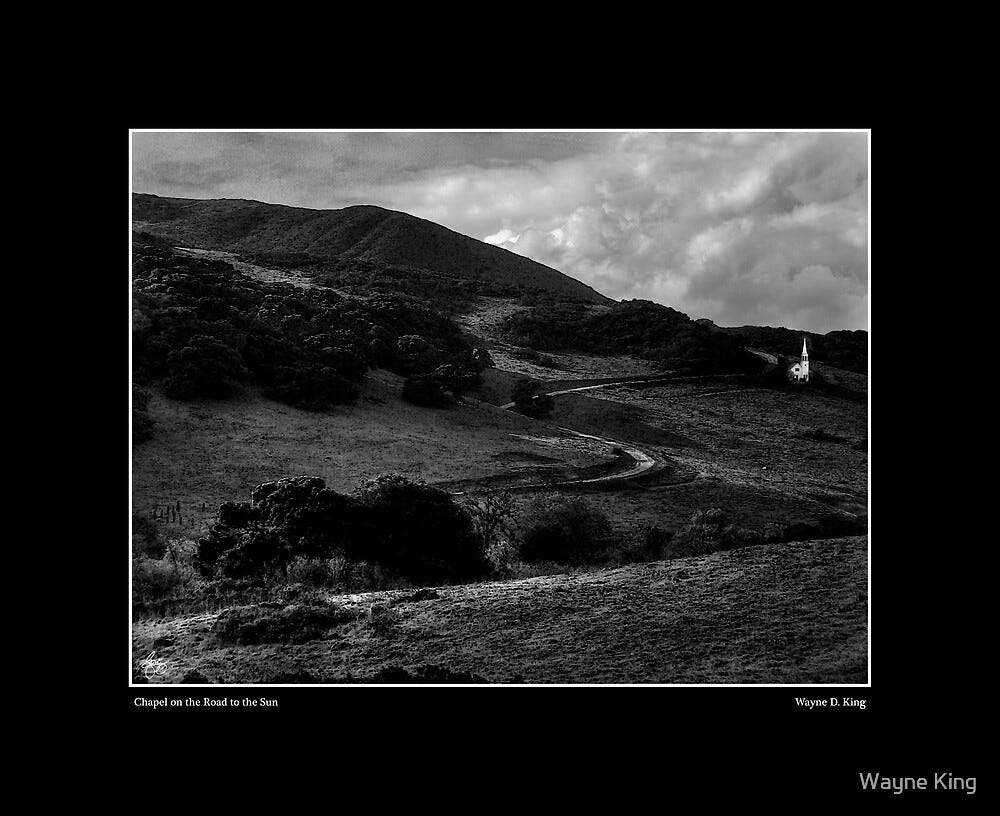
Chapel on a Road to the Sun Monochrome Poster
Money in Politics:
The deleterious effect of the “Citizens United” decision by the Supreme Court has been well documented. While I don’t foresee a change of heart among the members of the court at any time soon, we should continue to push for reforms that limit the effects of big money on the outcomes of political races. The suggestions above will have a significant effect in this area but money in politics is an insidious force, akin to rainwater on a leaky roof. If one avenue to enter the house is repaired the water will seek out other paths.
After thoughts:
Finally, though I might lose you on one or both of these, we might also consider a few other things. Encouraging the Senate - by whatever means - to bring back the old style filibuster instead of the nonsense that now passes for a filibuster. If all those Senators with their failing prostates had to actually stand up and debate for hours on end to hold up a bill I’ll wager we’d have very few filibusters.
A serious and substantive discussion about lowering the voting age to 16 instead of 18 is also in order. Ten other countries now permit it. In Scotland the Parliament passed the franchise to vote for 16 and 17 year-olds unanimously after successfully testing the premise during their referendum on independence.
In the last few years our kids have taught us a lot about what it means to be a good citizen. Maybe it’s time to say that if they can teach us to be good citizens, they can vote as well. We allow 16-year-olds to get married - they should be able to vote. They can’t do any worse than we have, and I suspect they would do a whole lot better. . . and by the way, any party that thinks they could count on their votes is in for a rude awakening - these kids are not going to be partisan. They scoff at the notion that any political party has a monopoly on good ideas or moral authority. If they get the franchise, you best sharpen your rhetorical skills.
You may have noticed that I have not once in this column mentioned the current President I have said it before. . . he is not the cause of the crisis in our Republic; he is a symptom. As Pogo said in the now oft-cited quote from Walt Kelly’s famous comic strip, “We have met the enemy, and he is us.”
Footnotes
*Working class and poor - advancing quickly into the middle class
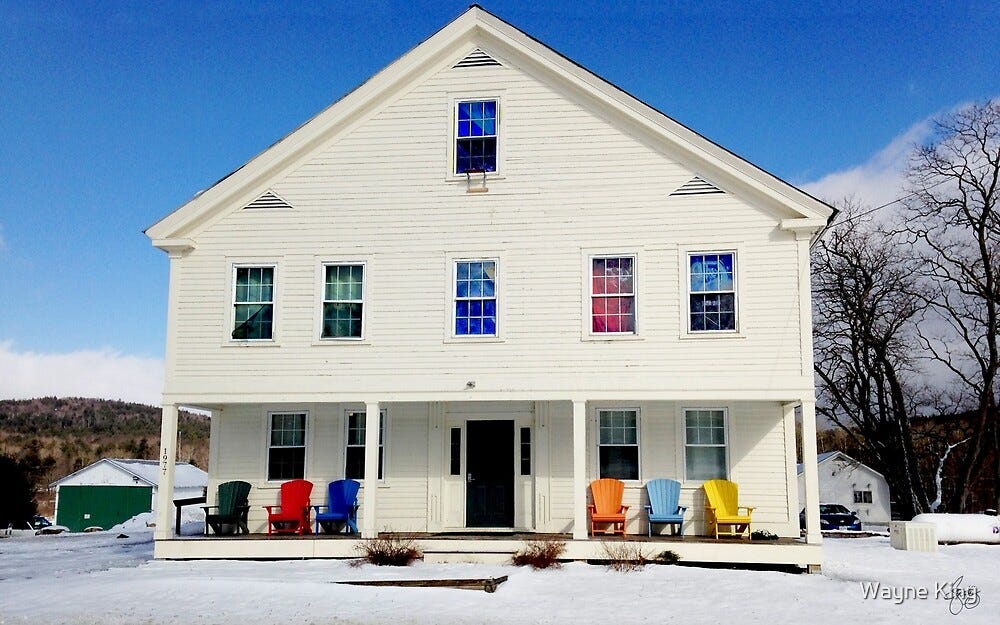
Colors of a Pike NH Home
Signed Originals — Unsigned Open Edition Prints